
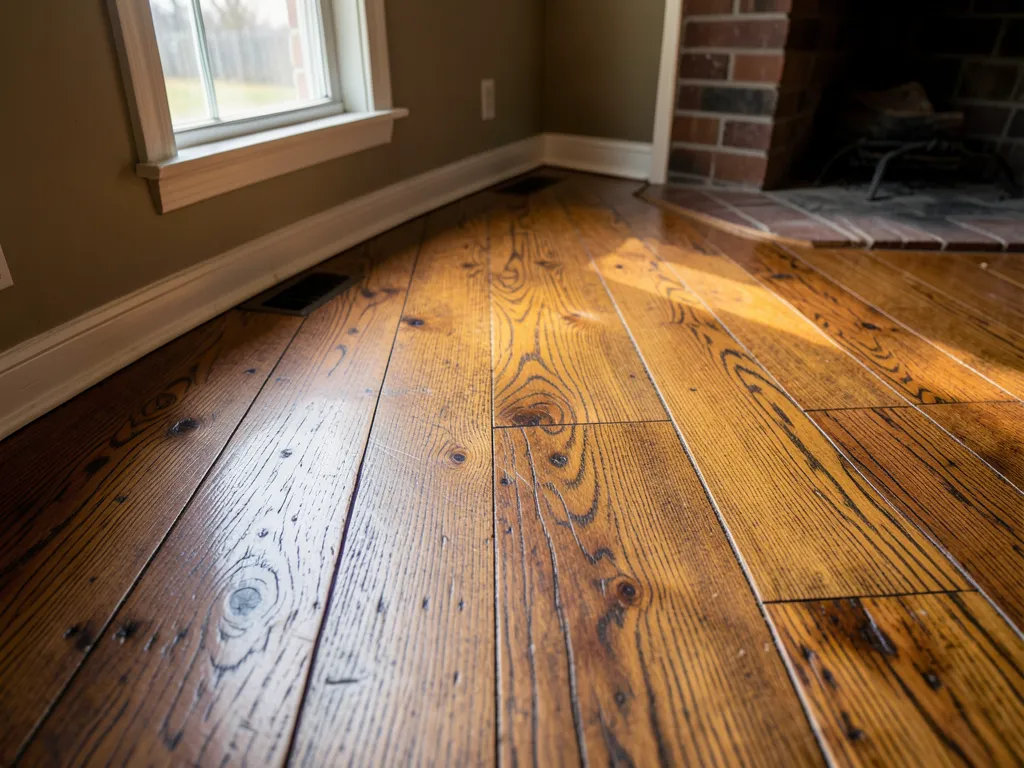
Historic Hardwood Floor Restoration in Metro Detroit
If you own a home in Metro Detroit that predates World War II — a brick Tudor near Boston-Edison, a Victorian in Corktown, a 1920s bungalow in Ferndale, or a century-old four-square in Dearborn Heights — there is a good chance you are living on top of a hardwood floor that was cut from old-growth timber and installed by hand. These floors were built to last generations, but a hundred Michigan winters, decades of carpet staples, and a few plumbing leaks can leave them squeaking, gapping, cupping, and stained. Historic hardwood floor restoration in Metro Detroit is a specialized craft, and it is exactly what Al Havner and Sons Hardwood Floors has been doing for five generations. This guide explains what makes older Detroit-area floors different, what typically goes wrong with them, and how professional restoration brings them back without erasing their character.
Why Historic Metro Detroit Hardwood Floors Behave Differently
Floors installed between roughly 1890 and 1950 were sawn from trees that had grown slowly in dense forests. That slow growth produced tight annual rings, higher density, and far more dimensional stability than most wood harvested today. You will often find quarter-sawn or rift-sawn oak, rock maple, heart pine, and occasionally Douglas fir in Detroit-area homes, along with narrow strip flooring that measures 1.5 to 2.25 inches wide instead of the wide planks popular in modern remodels.
What Sits Underneath Matters Just as Much
Older homes rarely have modern plywood or OSB subfloor panels. Instead, you will typically find solid plank subflooring laid diagonally across the joists, sometimes with a layer of building paper between the subfloor and the finished strip floor. That assembly moves differently than a contemporary build, and it reacts more dramatically to swings in indoor humidity. Restoring these floors without understanding what is underneath is one of the fastest ways to create a wavy, noisy, short-lived result — which is why a proper assessment of subfloor types and condition is always step one on our projects.
The Michigan Climate Factor
Metro Detroit sits in a climate that swings from humid 90-degree July afternoons to single-digit January mornings. Indoor relative humidity can drop below 20% in winter once the furnace runs constantly, then climb past 60% in summer. Wood absorbs and releases moisture, so old floors expand and contract every single year. Understanding that cycle is the difference between a restoration that lasts 30 years and one that looks tired in three.
Six Problems We See in Century-Old Floors Across Metro Detroit
1. Squeaks, Creaks, and Loose Boards
- Loose fasteners — old cut nails and early staples loosen as the wood shrinks and swells over decades.
- Subfloor movement — plank subfloors cup and rock against joists, especially in homes near the Detroit River where seasonal moisture is higher.
- Joist deflection — long unsupported spans in older homes flex underfoot, creating noise even after the floor itself is tightened.
2. Gaps Between Boards
Winter gaps are normal and often close on their own by August. Gaps that remain year-round, however, usually mean the floor has lost moisture content permanently or the original boards were installed green. We measure gap width and monitor seasonal movement before deciding whether filling, re-fastening, or selective board replacement is the right answer. Filling a seasonal gap that will close in summer creates a ridge you can feel with bare feet.
3. Water Damage, Cupping, and Crowning
A slow radiator leak, a failed washing machine hose, or water wicking up from a basement can cup the edges of every board in a room. Cupped floors must be dried and stabilized before any sanding begins — sanding a wet floor locks in the damage permanently. This is one of the most common mistakes we are called in to correct.
4. Pet Stains and Black Urine Spots
Urine penetrates deep into old-growth oak and leaves black stains that sanding alone will not remove. Treatment requires careful bleaching, oxalic acid, or targeted board replacement to match the surrounding floor.
5. Carpet Staples, Adhesive, and Paint
Removing carpet from a 1940s Royal Oak living room often reveals hundreds of staples, dried adhesive, and paint rings from decades of repainting baseboards. All of it must come up without gouging the wood underneath.
6. Worn Traffic Paths and Gray, Dull Finish
Original shellac, varnish, and wax finishes wear in the center of hallways and doorways long before the edges. The wood itself is usually fine — it simply needs to be sanded back to clean, bare lumber and finished again.
How Professional Historic Floor Restoration Works
Every restoration project follows a sequence, and skipping a step shows up in the finished product. Our process looks like this:
- On-site evaluation — moisture readings, subfloor inspection, gap measurement, and species identification.
- Repairs first — re-securing loose boards, sistering or shimming joists, replacing rotted or badly damaged boards with matched salvaged stock.
- Sanding — progressive grits using professional drum and edger equipment to flatten the floor without removing more surface than necessary.
- Detailing — hand scraping corners, stair treads, and around door casings so no sanding marks or finish lines remain.
- Staining or natural finishing — matching original color or updating it to a modern tone.
- Finishing on site — applying the finish in the home for a seamless, monotone result with no visible seams.
Our sanding and refinishing service is built around on-site custom finishing, which means your stairs, thresholds, and every adjoining room can be blended into one continuous look.
Matching Old Wood: Reclaimed and Custom-Milled Materials
One of the biggest challenges in restoring a historic Metro Detroit floor is sourcing replacement boards that match. New oak from a big-box store is generally wider, lighter, and cut from faster-grown trees, so it stands out immediately next to 100-year-old strip flooring.
The solution is reclaimed material. Salvaged lumber from demolished Detroit-area homes, schools, and warehouses often comes from the same era and the same old-growth forests as your original floor, which means grain, color, and density align naturally. We regularly source reclaimed oak, maple, and pine so repairs disappear into the surrounding floor instead of announcing themselves. If you want to learn more about this approach, our page on reclaimed hardwood flooring in the Detroit metro walks through what is available and how it is prepared.
Preserving Character: Borders, Inlays, and Original Details
Many homes in Indian Village, Palmer Woods, Boston-Edison, and the older sections of Grosse Pointe include decorative borders, inlaid strips, or a simple picture-frame detail around the perimeter of main rooms. These features are irreplaceable. Sanding them incorrectly, or replacing boards without preserving the pattern, permanently damages the home's architectural value.
Restoration work in these homes requires hand work — scraping along inlay lines, protecting border edges with the edger, and matching new material grain direction to the surrounding pattern. When a border or medallion is too far gone to save, we can reproduce it using matched species and period-correct dimensions.
Timing Matters: Seasonal Restoration in Michigan
There is a seasonal angle to every hardwood job in Metro Detroit. Late fall and winter bring dry indoor air and visible gaps, making it a popular time to address squeaks and loose boards. Spring thaw and heavy rains expose moisture intrusion and any cupping that developed over the winter. Summer's humidity is when floors swell the most.
The practical takeaway: the best time to refinish a floor is when indoor humidity can be controlled and stabilized, and when the home's HVAC system is running normally. We evaluate moisture conditions at your free estimate and schedule work for the window that gives your floor the best chance of a stable, long-lasting finish. We also offer weekend and emergency availability for water damage and unexpected projects — call (248) 549-4640 if you need urgent help.
Why Metro Detroit Homeowners Choose Al Havner and Sons
- Fifth-generation family business — decades of craftsmanship passed down through the same family.
- Award-winning work — winners of two National Wood Flooring Association "Floor of the Year" contests.
- Michigan-specialized expertise — we design every restoration around local humidity and temperature swings.
- Solid and engineered wood mastery — from antique strip flooring to modern wide-plank engineered products.
- On-site custom finishing — sanding, staining, and finishing in your home for a seamless result.
- Veteran-trained team — rigorous in-house training ensures precision on every detail.
- Bundled service discounts — save when you combine installation, refinishing, or stair work. Mention this page to lock in your offer.
- Customer satisfaction guarantee — premium materials and results built to last.
Serving Historic Homes Across 40+ Metro Detroit Communities
From Ann Arbor and Ypsilanti in the west to Grosse Pointe Farms and Grosse Pointe Shores on the lake, and from Detroit and Dearborn through Royal Oak, Birmingham, Bloomfield Hills, Troy, Rochester Hills, Northville, Livonia, Novi, and Sterling Heights, we work throughout the region. Our shop is based in Dearborn Heights, and our crews are on the road daily across Wayne, Oakland, Macomb, and Washtenaw counties.
If your floor is squeaking, cupping, or simply dull from decades of foot traffic, the wood underneath is very likely worth saving. Historic floors in this region were built from timber we cannot replace, and a careful restoration preserves both the value of your home and the story it tells.
Schedule Your Free Restoration Estimate
Al Havner and Sons Hardwood Floors provides free, no-pressure estimates for hardwood floor restoration, repair, installation, finishing and refinishing, and staircase work across Metro Detroit. We will inspect your floors, identify the source of the damage, and give you a clear plan with honest pricing — including bundle discounts if you combine two or more services.
Ready to bring your old floors back to life? Schedule online or call (248) 549-4640 today. Weekend and on-call emergency service is available, and we would be glad to show you what a fifth-generation floor crew can do for your Metro Detroit home.


