
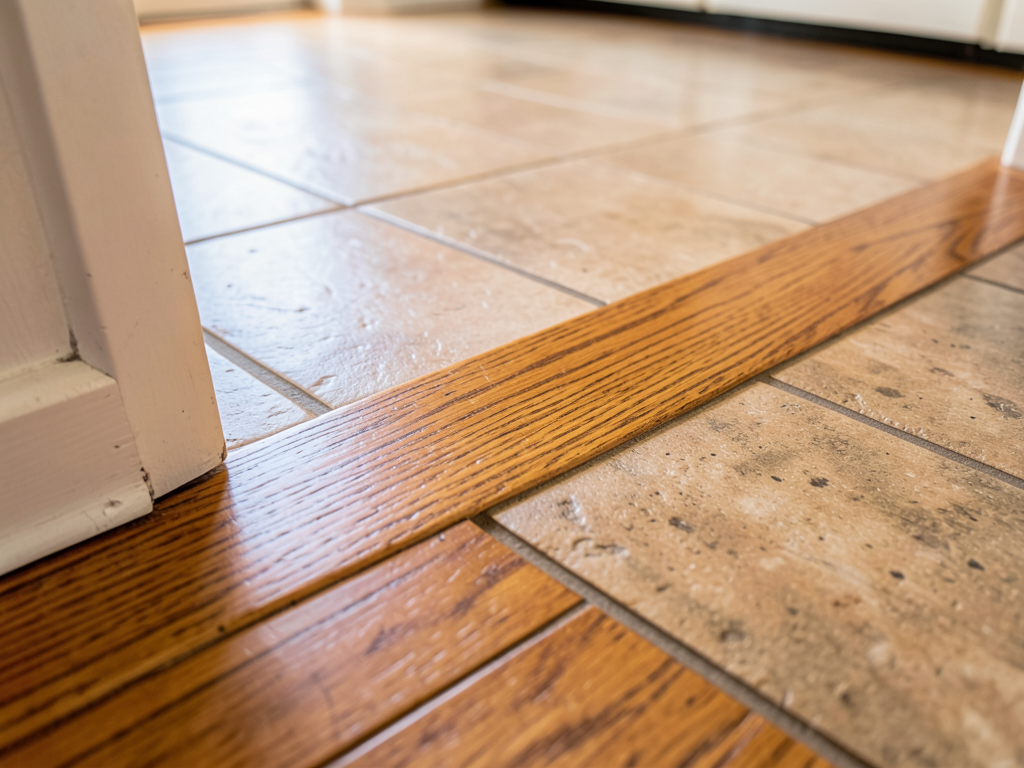
Hardwood Floor Transitions in Metro Detroit Homes
If you've ever walked from a carpeted bedroom into a hallway of gleaming oak and felt your toe catch on a ridge, you already understand why transitions matter. Across Metro Detroit, hardwood floor installation is as much about the seams as the field of the floor itself — the places where wood meets tile, carpet, concrete, or a staircase. At Al Havner and Sons Hardwood Floors, a fifth-generation family business based in Dearborn Heights, we've spent decades perfecting those details in homes from Ferndale bungalows to Grosse Pointe estates. This guide explains how professional transitions are planned, which materials work best in Michigan's climate, and what to look for before you hire anyone to install hardwood floors in Detroit-area homes.
Why Transitions Make or Break a Hardwood Floor Installation in Metro Detroit
A hardwood floor can be flawless in the middle of a room and still feel unfinished if the doorways look clumsy. Transitions are the engineered pieces that bridge one flooring surface to another — and in older Metro Detroit housing stock, they're rarely straightforward. A 1920s bungalow near downtown Ferndale may have three different subfloor heights after decades of remodeling. A colonial in Birmingham might have original oak abutting a newer tile kitchen. A loft near Woodward Avenue in Brush Park could transition from engineered wood to polished concrete in a single doorway.
Getting these junctions right requires measuring, milling, and finishing skills that go well beyond rolling out a prefinished plank. That's one reason our team still cuts many transition pieces on site rather than relying solely on factory profiles.
What Exactly Counts as a Transition?
- T-molds and threshold strips — used where two floors of similar height meet, such as hardwood to hardwood or hardwood to luxury vinyl.
- Reducers — a sloped strip that steps a taller hardwood surface down to a lower one, common at basement stairs and sunken living rooms.
- Overlap strips — often used at exterior doors or where a floor meets a sliding door track.
- Stair nosing — the rounded front edge of a tread that overhangs the riser, critical for safety and for a finished look.
- Custom-milled pieces — profiles fabricated to match an unusual gap, an antique floor thickness, or a historic trim detail.
The Michigan Climate Factor
Metro Detroit sits in a climate that swings hard in both directions. Summer humidity pushes indoor moisture levels up; winter forces hot, dry furnace air through every room. Solid hardwood expands and contracts with those shifts, so a transition that's cut too tight in July can buckle by February, and one installed with an oversized gap in January can look sloppy by August.
We account for this by leaving properly sized expansion space at every perimeter and transition, then concealing it with a profile that accommodates movement. Engineered hardwood, with its cross-ply core, is often the smarter choice in basements and slab-on-grade rooms where moisture is less predictable — a subject we cover in depth on our types of hardwood floors page.
Transition Options We Install Across Metro Detroit Homes
There isn't one right answer for every doorway. The best profile depends on height difference, flooring materials, traffic patterns, and whether the transition needs to be water-resistant.
T-Molds and Threshold Strips
When two floors sit at nearly the same height, a T-mold creates a clean, flat bridge that's comfortable underfoot. It's the go-to solution where new prefinished oak meets an existing hardwood hallway — a very common scenario in homes around Royal Oak and Berkley, where homeowners add flooring one zone at a time.
Reducers and Overlap Strips
Reducers handle height differences gracefully, which matters in split-level homes scattered throughout Warren, Sterling Heights, and Southfield. Overlap strips and water-resistant thresholds are the standard at exterior doors, where winter salt and slush make moisture protection essential.
Stair Nosing and Bullnose Trim
Stairs are where transitions become safety features. An undersized or poorly fastened nosing can flex, squeak, and eventually crack. Our team fabricates stair treads and nosings to match the species, stain, and finish of your floor so the staircase reads as one continuous design rather than an afterthought. You can see the range of work we do on our staircase installation and refinishing services page.
Matching Transition Material to Your Existing Floor
One of the most common mistakes we see is a beautiful new floor paired with a mismatched transition strip from a big-box store. Species, grain direction, stain tone, and sheen all need to line up, or the seam will draw the eye for all the wrong reasons.
- Species matching — red oak, white oak, hickory, maple, and walnut each have distinct grain patterns and color shifts over time.
- Stain and dye matching — especially important in historic districts like Boston-Edison and Indian Village, where original floors have patinated for a century.
- Sheen consistency — a satin transition against a semi-gloss field looks off, even if the color is perfect.
- On-site custom finishing — because we sand and stain after installation, we can blend a new transition into an existing floor rather than forcing a factory finish to match.
That on-site finishing capability is a significant advantage. Rather than guessing from a sample chip, we test stains directly against your existing floor under your home's actual lighting.
Local Homes, Local Challenges We Know Well
Every community in the region has its own housing personality, and that shapes how a floor installation should be approached.
- Ferndale and Royal Oak — compact bungalows and craftsmans where rooms are small and doorways are numerous, so transitions carry visual weight.
- Grosse Pointe, Grosse Pointe Park, and Grosse Pointe Farms — larger homes with sunrooms, servant staircases, and multiple floor-height changes that call for custom profiles.
- Dearborn and Dearborn Heights — a mix of post-war and mid-century homes where subfloor transitions between additions are common.
- Ann Arbor and Kerrytown — historic homes with narrow-plank floors that need carefully matched replacement stock.
- Birmingham and Bloomfield Hills — newer construction and major renovations where engineered and solid wood meet tile, stone, and radiant-heated slabs.
We serve more than 40 Metro Detroit cities, so there's a strong chance we've already worked in a home like yours. Our Detroit metro service area page lists the communities we cover.
Installation Details That Prevent Costly Callbacks
Transitions fail for predictable reasons, and most of them trace back to the installation stage rather than the profile itself.
Subfloor Flatness and Height
Industry standards call for subfloor flatness within a specific tolerance over a given span. When a floor has a hump or dip near a doorway, no transition strip will sit properly. We check flatness early, then level or plane as needed before a single board goes down.
Fastening and Movement
Transitions must be fastened securely but allowed to move with the floor. Staples, cleats, and adhesive all play a role depending on the substrate. In Michigan basements with concrete slabs, moisture barriers and appropriate adhesives matter as much as the wood itself.
Expansion Gaps Done Right
A quarter-inch gap at a doorway is not a flaw — it's engineering. The flaw is leaving it exposed instead of covering it with a correctly sized profile.
A Seasonal Note: Winter Is Tough on Transitions
By late January, indoor relative humidity in many Metro Detroit homes drops into the teens or twenties. Wood loses moisture, planks shrink slightly, and gaps open up. Then spring humidity returns and everything moves back. A transition installed with movement in mind handles that cycle quietly. One installed tight against both surfaces often doesn't.
Practical steps for homeowners:
- Keep indoor humidity between roughly 35% and 55% year-round with a humidifier or dehumidifier as needed.
- Place mats at exterior doors to capture salt and grit before it reaches the wood.
- Wipe up winter moisture promptly, especially near doorways and thresholds.
- Inspect transitions each spring for lifting, rocking, or visible gaps and address small issues early.
If a piece of trim has come loose or a reducer is cracking, that's a repair — not a reason to replace the floor. We offer weekend and on-call availability for urgent issues.
Why Homeowners Choose Al Havner and Sons
We're a fifth-generation family business and winners of two National Wood Flooring Association "Floor of the Year" awards. Our team is trained in-house, our installers work with both solid and engineered wood, and we handle everything from subfloor prep to final coat — including the small trim details most contractors rush through.
We also make bundling easy. Combine two or more services — say, floor installation plus refinishing, or new flooring plus a staircase — and you'll save money. Mention this page when you call to lock in the offer.
Schedule Your Free Metro Detroit Flooring Assessment
Whether you're replacing carpet in a Dearborn Heights ranch, adding engineered wood to a Troy basement, or restoring original oak in a Royal Oak four-square, the transitions deserve the same attention as the field. Call (248) 549-4640 or book an appointment online and we'll walk your floor plan, measure the doorways, and recommend profiles that will look right and hold up through decades of Michigan seasons.


