
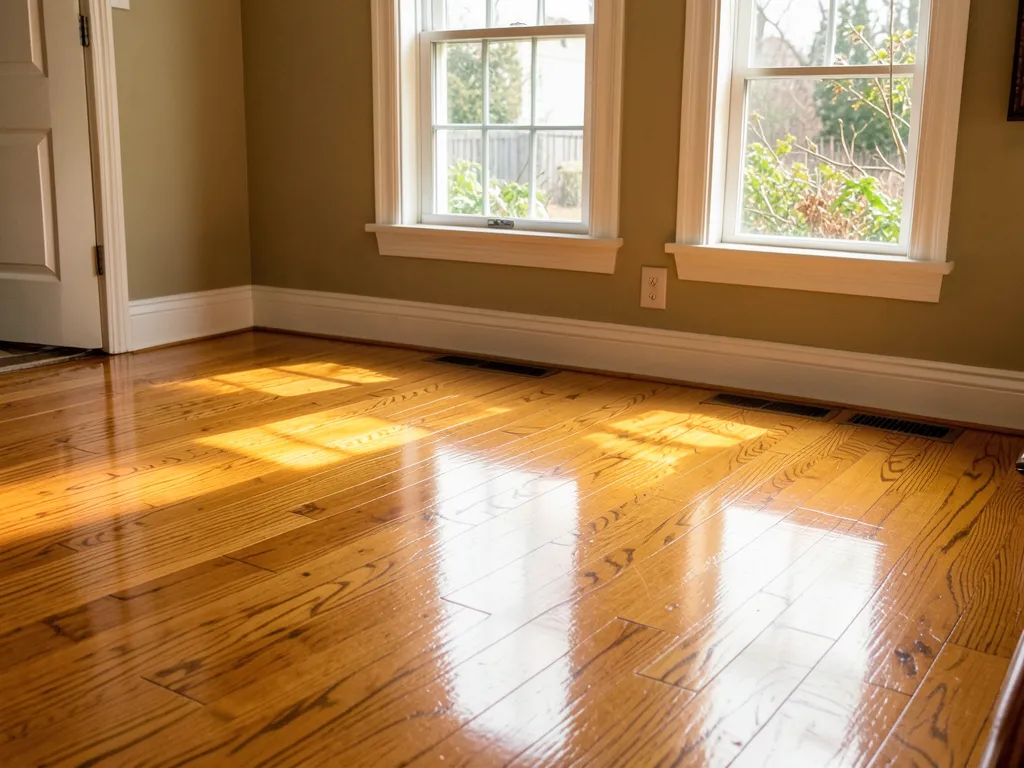
Fixing Squeaks, Gaps, Cupping Metro Detroit Floors
Every Metro Detroit homeowner eventually hears it: the creak under the hallway runner, the thin line that opens between two oak boards in February, the soft rise at the edge of the kitchen floor after a wet spring. In a region where July humidity can push past 80% and January furnaces pull indoor relative humidity down into the teens, hardwood floors live through a wider swing of conditions than almost anywhere in the country. Al Havner and Sons Hardwood Floors, a fifth-generation family business based in Dearborn Heights, has spent decades diagnosing and correcting exactly these problems in homes from Detroit's Boston-Edison Historic District to newer subdivisions in Novi, Troy, and Rochester Hills.
This guide walks through the three most common hardwood complaints — squeaks, gaps, and cupping — explains which ones are normal seasonal movement and which ones signal a real problem, and shows you how a professional repair or refinish can restore a floor that looks tired or sounds worse than it should.
Why Metro Detroit Floors Move More Than Floors Elsewhere
Wood is hygroscopic, meaning it absorbs and releases moisture from the air around it. When humidity rises, boards swell. When it drops, they shrink. That is not a defect — it is physics. What makes Michigan harder on hardwood than, say, Arizona or South Carolina is that both extremes happen inside the same twelve-month cycle.
Michigan's Humidity Swing Is the Real Culprit
Consider what your floor experiences in a single year. In late summer, air off Lake St. Clair and the Detroit River pushes relative humidity indoors toward 70% or higher, especially in homes without strong air conditioning or with damp basements. By mid-January, running a furnace for weeks on end can drag indoor humidity below 20%, drier than most deserts. A typical oak plank can move several percent in width across that range. Multiply that by twenty boards across a living room and you get visible gaps in winter and tight, slightly crowned seams in summer.
Homes near Hines Drive, the Rouge River corridor, and low-lying pockets of Dearborn Heights, Livonia, and Grosse Pointe tend to see the widest swings because their crawl spaces and basements hold more ground moisture.
Home Age Changes the Equation
- Pre-1950 homes in Indian Village, Boston-Edison, and downtown Royal Oak often have narrow strip flooring nailed over diagonal subfloor boards — plenty of natural expansion room, but also more squeak potential as nails loosen over 80 years.
- 1950s–1980s ranches across Warren, Ferndale, and Madison Heights commonly sit over slab or crawl spaces with minimal vapor control, making cupping more likely.
- Newer construction in Troy, Auburn Hills, and South Lyon uses engineered lumber and tighter building envelopes, which can concentrate moisture in unexpected places.
Squeaks: What Causes Them and When to Worry
A squeak is simply two surfaces moving against each other — usually a board against a nail, or a subfloor panel against a joist. It is annoying, but it is rarely urgent. The question is whether the movement is isolated or systemic.
Common Sources of Squeaks
- Loose fasteners. Older cut nails back out slightly over decades. Flooring staples can miss a joist or split a tongue.
- Subfloor movement. Panels that were not glued or screwed down properly will flex underfoot, rubbing against each other.
- Seasonal shrinkage. When boards dry in winter and shrink, previously tight joints open and start to move.
- Humidity-related joist movement. Dimensional lumber in a damp crawl space swells and twists, pushing the floor above it.
When a Squeak Signals Something Bigger
Call a professional if the noise comes with a visible dip, a soft spot, a board that flexes noticeably, or a squeak that suddenly appears in a concentrated area. Those can point to a failing subfloor, a water leak, or insect damage. A proper diagnosis starts underneath the floor. Our team regularly inspects subfloor types and conditions before recommending any repair, because fixing the surface without fixing the cause guarantees a repeat visit.
Repairs usually involve driving screws from below where a basement or crawl space allows, face-nailing and filling from above, or replacing individual boards during a refinishing project when access from underneath is not possible.
Gaps Between Floorboards: Seasonal or Structural?
This is the single most misunderstood hardwood issue in Michigan. Not all gaps are problems, and filling the wrong gap can make things worse.
Normal Seasonal Gaps
If gaps appear in January and mostly close by July, you are looking at normal seasonal movement. The fix is not filler — it is humidity control. Wood filler pushed into a winter gap will be squeezed out or crushed when boards expand in summer, leaving a cracked, ugly line. Instead:
- Keep indoor relative humidity between 35% and 55% year-round.
- Run a whole-home humidifier in winter; a portable unit in the main living area helps in smaller homes.
- Use air conditioning or a dehumidifier in summer, particularly in basements and crawl spaces.
Gaps That Need Professional Attention
- Gaps wider than a quarter inch that do not close in humid months.
- Gaps that appeared suddenly after a plumbing leak, appliance failure, or sump pump backup.
- Gaps around the entire perimeter of a room, which often means the floor was installed too dry or the subfloor is shifting.
- Wide-plank floors in Birmingham, Bloomfield Hills, and Northville homes, where plank width amplifies movement.
In these cases, a professional can replace individual boards, re-secure the field, and — when the whole floor shows the same pattern — sand and refinish to bring everything back to a uniform, seamless surface. You can read more about that process on our hardwood sanding and refinishing page.
Cupping and Crowning: The Moisture Warning Signs
Cupping and crowning are the two shapes moisture problems take. Learning to tell them apart saves homeowners in Grosse Pointe, Royal Oak, and Ann Arbor a lot of guesswork.
How to Tell Them Apart
- Cupping: the edges of each board sit higher than the center, creating a washboard effect. This almost always means moisture is entering from below — a damp crawl space, a slab without a vapor barrier, a slow leak, or a basement that floods in spring.
- Crowning: the center of each board sits higher than the edges. This usually results from surface moisture, standing water, or over-sanding a previously cupped floor.
Why You Should Fix the Source First
Sanding a cupped floor before the moisture source is corrected is one of the most expensive mistakes in the industry. The floor will simply cup again, and each sanding cycle removes thickness you cannot get back. The correct sequence is: find and fix the moisture source, let the floor stabilize through a full seasonal cycle if possible, then refinish.
Where the damage is limited to a handful of boards, a spot repair and careful blending can be enough. Where the whole floor is affected, a full sand and refinish with a properly specified finish — applied on site by our crew — delivers the most consistent result. Explore our hardwood finishing services for a closer look at finish options and what works best in Michigan homes.
Repair, Refinish, or Replace? Choosing the Right Fix
Here is a simple way to think about it:
- Repair: a few damaged, stained, or loose boards in an otherwise healthy floor. Often done as a weave-in replacement followed by a screen and coat.
- Refinish: worn finish, light surface scratches, gray traffic lanes, or widespread cupping that has been resolved. Sanding removes the old surface and a new finish is applied.
- Replace: structural failure, extensive water damage, pet stains that have penetrated deep into the wood, or a floor that has already been sanded too many times to sand again safely.
Engineered flooring changes the math slightly. Many engineered products can be refinished once or twice depending on wear-layer thickness, and they handle moisture swings better than solid wood because their plywood core is more dimensionally stable. That is why engineered options are popular in basements and slab-on-grade homes across Dearborn, Ferndale, and Sterling Heights.
A Simple Seasonal Maintenance Calendar for Metro Detroit
- Spring (thaw season): check crawl spaces and basements for standing water, clear gutters, and confirm your sump pump is working. This is when cupping complaints peak.
- Summer: keep indoor humidity under 55%, use rugs at entry points to catch grit, and avoid wet mopping or steam mops.
- Fall: inspect for exterior drainage issues, add felt pads to furniture legs, and schedule any refinishing before the holidays.
- Winter: run a humidifier, keep the thermostat steady, and wipe up snowmelt immediately. Dry air is the main cause of wide winter gaps.
Why Metro Detroit Homeowners Call Al Havner and Sons
Diagnosing floor problems is part detective work and part craftsmanship. Al Havner and Sons Hardwood Floors brings both:
- Fifth-generation craftsmanship — decades of knowledge passed down through a family that has been installing and finishing floors since long before humidity control was a household word.
- Award-winning work — two National Wood Flooring Association "Floor of the Year" contest wins.
- Michigan-specific expertise — we understand what lake-effect humidity, furnace-dry winters, and older housing stock do to wood.
- On-site custom finishing — we sand and stain after installation for a truly seamless, made-for-your-home result.
- Solid and engineered mastery — we work with traditional and modern flooring systems equally well.
- Veteran-trained crew — rigorous in-house training keeps tolerances tight on every job.
- Weekend and emergency availability — because water damage never waits for Monday.
- 40+ Metro Detroit cities served — from Royal Oak and Ferndale to Ann Arbor, Warren, and Grosse Pointe Farms.
- Bundle discounts — ask about savings when you combine two or more services.
If you would like to know whether your squeaks, gaps, or cupped boards need a repair or a full refinish, our team can walk the floor with you, check moisture levels, and give you an honest recommendation.
Ready to get an expert opinion? Schedule your free assessment online or call (248) 549-4640. Mention this page when you book to lock in your bundled-service discount.


